
Teaching Philosophy for Teaching English and ESL/EFL
Vocabulary Development
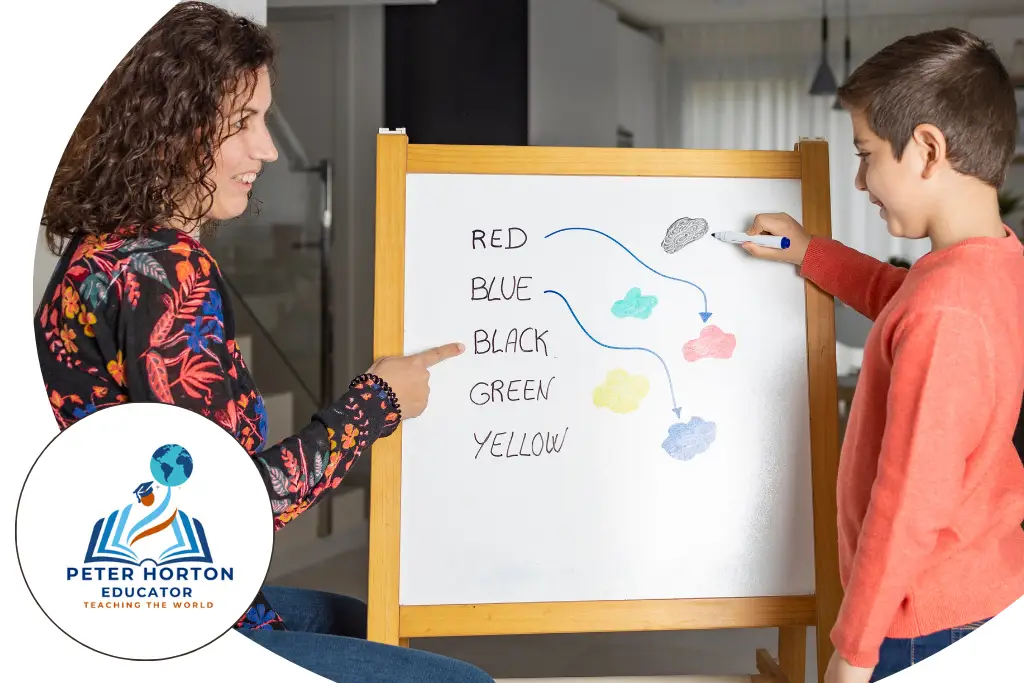
Vocabulary development is the cornerstone of language proficiency. To achieve this, I use a variety of strategies, including visual aids, flashcards, and interactive games, to make learning more engaging. In addition, technology tools such as text-to-speech, speech-to-text applications, Quizlet, and digital word maps further enhance vocabulary learning, making it both fun and effective.
Grammar Mastery
I believe in a comprehensive approach to grammar instruction that combines both prescriptive and descriptive theories, as well as input and output-based methods. In practice, contextualized grammar teaching allows students to understand and apply grammar rules through meaningful use rather than rote memorization. Moreover, by integrating Gardner’s Multiple Intelligences, I design a variety of activities—such as games, songs, and writing exercises—to address diverse learning styles and keep lessons engaging. Additionally, Bloom’s Taxonomy guides my scaffolding process, helping students move gradually from basic recall to deeper levels of application and analysis.
Effective Language Usage
Beyond mere correctness, effective language use also requires appropriateness and fluency. To support this, I design real-life learning situations through role-plays, simulations, and task-based activities that help bridge theoretical knowledge with practical application. As a result, students gain the confidence to communicate effectively and adapt to various real-world contexts.
Writing Skills
Writing is not only essential for communication but also for self-expression. To support this skill, my instruction covers creative, academic, and practical forms of writing. Moreover, activities such as journaling, blogging, and collaborative projects encourage creativity and promote meaningful peer interaction. In addition, I use process writing techniques to help students develop their unique voices and express their ideas clearly and effectively.
Reading Comprehension
A balanced literacy approach—combining both extensive and intensive reading—is essential for building strong reading comprehension skills. Through this approach, students engage with a wide range of texts, from literature to informational articles. Furthermore, strategies such as predicting, summarizing, and questioning help them decode complex passages and enhance their overall understanding of what they read.
Listening Proficiency
Listening not only requires focused attention but also careful interpretation. To strengthen this skill, I use authentic audio materials—such as podcasts, songs, and real-life conversations—to expose students to different accents and speech patterns. Moreover, activities like dictations, note-taking, and comprehension questions encourage active listening and enhance students’ auditory processing skills.
Speaking Fluency
Confidence and clarity in speaking are both crucial for effective communication. To build these skills, I create a safe and supportive classroom environment that encourages verbal practice through discussions, presentations, and debates. In addition, community learning and peer feedback foster collaboration and provide students with opportunities to experiment with language, thereby enhancing their fluency and self-expression.
Methods to Overcome Fear of Speaking
Overcoming the fear of speaking is a vital step for language learners. To support this process, I use positive reinforcement, small group activities, and gradual exposure to speaking tasks. Moreover, role-playing and peer support help create a safe and encouraging environment where students feel comfortable expressing themselves. As a result, they gradually build confidence and improve their speaking abilities.
Read-Aloud and Copying Strategies
Read-aloud and copying exercises play an important role in developing language skills, including pronunciation, intonation, and reading fluency. In addition, these activities help strengthen listening comprehension, vocabulary growth, and grammatical understanding. Through consistent practice, students improve their articulation and become more familiar with sentence structures and the natural rhythm of the language.
Student-Centered Learning
A student-centered approach is fundamental to effective teaching. To implement this, I tailor instruction to each learner’s needs, interests, and learning styles. Furthermore, task-based and project-based assignments promote active participation and personal investment, thereby making the learning process more engaging, meaningful, and relevant to students’ real-life experiences.
Integrating Technology
Technology plays a vital role in enhancing language education. To maximize its benefits, I integrate digital tools that create interactive and immersive learning experiences. Moreover, text-to-speech and speech-to-text applications, language learning apps, and online collaboration platforms support personalized instruction and offer students instant feedback, helping them learn more effectively and independently.
Holistic Assessment
Comprehensive and ongoing assessment is essential for evaluating all language domains effectively. To achieve this, I use a variety of tools, including quizzes, portfolios, peer reviews, and self-assessments, to monitor student progress. Furthermore, formative assessments help guide instruction and provide feedback for improvement, while summative assessments measure overall proficiency. Together, these methods ensure fair, accurate, and continuous evaluation that supports every learner’s growth.
Creating an Inclusive and Engaging Classroom Environment
A positive classroom environment is essential for effective learning. To achieve this, I strive to create a space that is inclusive, welcoming, and intellectually stimulating. In addition, I apply classroom management strategies that maintain a respectful and orderly atmosphere, thereby allowing all students to thrive regardless of their backgrounds or proficiency levels. Moreover, diversity and social class considerations are central to my teaching practice, ensuring that every student feels valued, supported, and empowered to succeed.
Learning Style and Strategies for Teaching and Learning
How Do You Learn Best?
Have you ever wondered why some people learn better by doing, while others learn better by listening or reading? Or have you noticed that some teachers use different methods and activities to teach the very same topic? Perhaps you’ve even felt bored or frustrated in a class that didn’t match your learning style.
If you answered yes to any of these questions, you’re not alone. Learning is a complex and deeply personal process influenced by many factors—such as your interests, preferences, strengths, weaknesses, and goals. In other words, there’s no single “right” way to learn. However, understanding your unique learning style can help you grasp concepts more easily and make learning more enjoyable.
In the following sections, you will explore six different learning styles commonly used in education today. They are:
A student-centered approach is a learning style that places **you—the student—**at the heart of the learning process. In this approach, you have greater control and choice over what, how, when, and where you learn. Instead of being a passive receiver of information, you become an active participant in your own education. Furthermore, you are encouraged to explore your interests, ask meaningful questions, and pursue personal goals while using your strengths and skills to guide your learning.
In addition, a student-centered approach gives you more responsibility and accountability for your own progress. This means you are expected to set goals, plan activities, monitor your development, and reflect on your outcomes. At the same time, collaboration plays a key role—you often work with peers and teachers, exchanging feedback and support to enhance learning outcomes.
Some examples of a student-centered approach include:
- Project-based learning: You work on a real-world problem or question that interests you and create a product or presentation that demonstrates what you’ve learned.
- Inquiry-based learning: You investigate a topic or phenomenon that sparks your curiosity, using your own questions and methods to discover answers.
- Self-paced learning: You study different topics or skills at your own pace, choosing the difficulty level and resources that best match your needs and learning style.
Community learning is a learning style that emphasizes the social and cultural dimensions of education. In this approach, you learn with and from others—such as classmates, teachers, family members, friends, and community participants. Rather than being an isolated learner, you become an active member of a shared learning community. Moreover, you are encouraged to share your ideas, experiences, and perspectives, while also listening to and respecting those of others. Through this process, you begin to connect your learning to your personal life and the broader world around you.
In addition, community learning takes place in a variety of settings and contexts, including the classroom, home, neighborhood, or even online spaces. This means that learning is not limited to one place or time but happens continuously across different environments. Furthermore, you are encouraged to contribute meaningfully to your learning community and society at large, using your knowledge to promote collaboration, empathy, and positive change.
Some examples of community learning include:
- Service learning: You participate in a project or activity that benefits your community or supports a social cause, then reflect on how it connects to your classroom learning.
- Cooperative learning: You work in a small group with peers, sharing roles and responsibilities to complete a task or solve a problem collaboratively.
- Cultural learning: You explore the history, traditions, values, and beliefs of various cultures to understand how they influence your own identity and worldview.
Cumulative learning is a learning style that emphasizes gradual and continuous development over time. In this approach, you build upon what you already know and can do, gradually adding new knowledge and skills as you progress. Rather than learning isolated facts or concepts, you connect ideas to form a coherent and meaningful understanding of a subject or domain. Additionally, you are encouraged to review and revise your previous learning, while also integrating new knowledge to strengthen and expand your understanding.
Moreover, cumulative learning involves practicing and applying what you know in various situations and contexts. This means you go beyond memorizing or repeating information—you learn to use it effectively for different purposes and audiences. In doing so, you are encouraged to transfer and adapt your learning to new or unfamiliar scenarios, demonstrating flexibility and problem-solving skills. Furthermore, you are expected to communicate your knowledge in multiple ways and formats, showing both depth and creativity in your understanding.
Some examples of cumulative learning include:
- Portfolio: You collect and organize samples of your work, along with reflections that show your learning progress and achievements over time.
- Simulation: You participate in realistic and interactive scenarios that require you to apply your knowledge and skills in practical ways.
- Performance: You demonstrate your learning through a presentation, speech, play, song, or dance, sharing what you’ve learned with an audience.
Task-based learning is a learning style that emphasizes the use of authentic and meaningful tasks. In this approach, you learn by engaging in activities that are relevant and interesting to you, with clear and realistic goals and outcomes. Rather than merely studying abstract or theoretical information, you apply what you learn to real-life situations and practical problems. Moreover, you are encouraged to complete these tasks using your creativity, critical thinking, and problem-solving skills, which help you connect knowledge to real-world contexts.
Furthermore, task-based learning involves following a structured and systematic process to complete tasks effectively. This means you don’t simply perform activities randomly or intuitively; instead, you follow specific steps or stages that guide your learning journey. Throughout the process, you are encouraged to plan, execute, monitor, and evaluate your tasks carefully. Additionally, you use feedback and self-reflection to assess your progress and continually improve your performance.
Some examples of task-based learning include:
- Design: You create a product, service, or solution that meets a specific need or demand, such as a poster, a website, or a game.
- Experiment: You conduct a scientific experiment that tests a hypothesis or question, collecting and analyzing data to draw meaningful conclusions.
- Interview: You prepare and conduct an interview with someone who has expertise or experience in a topic you want to explore further.
Blended learning is a learning style that combines different modes and methods of instruction. In this approach, you learn through a mix of online and offline, synchronous and asynchronous, as well as individual and collaborative activities. In other words, you are not confined to a single mode of learning; instead, you can access a wide range of learning opportunities. Consequently, you are encouraged to choose and customize your learning experiences based on your preferences, needs, and personal goals.
Moreover, blended learning emphasizes the integration and balance of these diverse methods rather than merely alternating between them. Instead of switching from one style to another, you learn how to combine them strategically to maximize your understanding and engagement. Through this process, you are encouraged to leverage the strengths of each mode while addressing their limitations. Additionally, you are expected to manage your time, organize resources, and coordinate activities effectively to ensure a productive learning experience.
Some examples of blended learning include:
- Flipped classroom: You watch a video lecture or read a text before class, then use class time for discussions, practice, or project-based work.
- Hybrid course: You participate in a course that includes both online and face-to-face sessions, using both platforms for communication, collaboration, and assessment.
- Personalized learning: You engage with a digital platform that adapts to your learning level, pace, and style while providing customized feedback and guidance.
A flipped classroom is a learning style that reverses the traditional order of teaching and learning. In this approach, you learn by completing homework or preparatory activities before class and by engaging in hands-on, interactive tasks during class time. Instead of passively listening to a teacher’s lecture, you take part in active learning experiences that reinforce understanding. In doing so, you are encouraged to prepare for lessons in advance, explore the topic independently, and then apply and deepen your knowledge through class discussions and activities.
Furthermore, a flipped classroom promotes learning through collaboration, feedback, and interaction. Rather than working entirely on your own, you engage with your teacher and peers to exchange ideas and solve problems together. During class, you are encouraged to ask questions, share insights, and give and receive constructive feedback. Through this process, you learn how to improve your performance using input from others while also taking greater responsibility and initiative for your own progress.
Some examples of flipped classrooms include:
- Math: You watch a video lesson that explains a mathematical concept before class, then use class time to solve problems, play educational games, or complete projects that apply the concept.
- History: You read a text or article about a historical event or period before class, then use class time for discussions, debates, or role-playing activities that bring history to life.
- Science: You conduct a simple experiment at home or watch a demonstration before class, then use class time to analyze data, interpret results, and present your findings.
Top 20 Practices in Teaching and Learning Theories
Gardner’s Multiple Intelligences
Howard Gardner’s theory posits that there are multiple types of intelligence beyond the traditional notion of IQ. These include linguistic, logical-mathematical, spatial, musical, bodily-kinesthetic, interpersonal, intrapersonal, and naturalistic intelligences. Teachers should design activities that engage these varied intelligences to cater to the diverse strengths of students.
Bloom’s Taxonomy
Bloom’s Taxonomy categorizes cognitive skills into six hierarchical levels: remembering, understanding, applying, analyzing, evaluating, and creating. Using this framework, teachers can design lessons that encourage higher-order thinking skills.
Constructivist Learning Theory
This theory emphasizes that learners construct their own understanding and knowledge of the world through experiences and reflecting on those experiences. Teachers should provide hands-on, inquiry-based activities to facilitate this process.
Vygotsky’s Social Development Theory
Lev Vygotsky highlighted the importance of social interaction in learning. His concept of the Zone of Proximal Development (ZPD) suggests that students learn best with guidance from more knowledgeable others. Collaborative learning and peer tutoring are effective strategies.
Metacognition
Teaching students to think about their own thinking can improve learning outcomes. Strategies include self-reflection, self-assessment, and teaching students to set goals and monitor their own progress.
Differentiated Instruction
Differentiated instruction involves tailoring teaching methods and materials to the diverse needs of students. This can be achieved through varied instructional strategies, flexible grouping, and providing choice in learning activities.
Inquiry-Based Learning
This approach encourages students to ask questions, conduct research, and explore subjects deeply. It nurtures curiosity and critical thinking.
Cooperative Learning
Students work together in small groups to accomplish a common goal. This method promotes communication, collaboration, and accountability.
Experiential Learning
Learning through experience, or “learning by doing,” helps students connect theoretical concepts with real-world applications. Field trips, simulations, and hands-on projects are examples.
Scaffolding
Providing temporary support to students until they can perform tasks independently. This can involve breaking tasks into smaller steps, using visual aids, and offering feedback.
Flipped Classroom
In this model, students learn new content at home through videos or readings and apply that knowledge in the classroom through interactive activities. This allows for more hands-on, personalized learning during class time.
Formative Assessment
Ongoing assessments that provide feedback to students and teachers about learning progress. These can be quizzes, exit tickets, or informal observations.
Summative Assessment
Evaluations that measure student learning at the end of an instructional period. Examples include final exams, projects, and standardized tests.
Problem-Based Learning (PBL)
Students learn by solving complex, real-world problems. This approach develops problem-solving skills and promotes a deep understanding of content.
Project-Based Learning
Similar to PBL, students work on a project over an extended period, which culminates in a final product or presentation. It emphasizes student choice, collaboration, and application of knowledge.
Direct Instruction
A teacher-centered approach characterized by structured, explicit teaching of specific skills or concepts. It is effective for teaching foundational knowledge.
Inquiry-Based Science Education (IBSE)
Encouraging students to learn science through inquiry, experiments, and scientific questioning. It fosters a deeper understanding of scientific principles and practices.
Educational Technology
Integrating digital tools and resources into teaching to enhance learning. Examples include educational software, online resources, and interactive whiteboards.
Growth Mindset
Promoting the belief that abilities and intelligence can be developed through effort and persistence. Encouraging students to embrace challenges and learn from failures.
Culturally Responsive Teaching
Recognizing and honoring students’ cultural backgrounds in teaching. It involves using culturally relevant materials, practices, and creating an inclusive classroom environment.
Top 20 Assessment Methods and Theories
Diagnostic Assessment (Pre-Assessment)
Used at the beginning of a learning segment to determine students’ prior knowledge and skills. It helps in planning instruction.
Formative Assessment
Ongoing assessments that provide immediate feedback to improve student learning and instruction. Examples include quizzes, observations, and journal entries.
Summative Assessment
Conducted at the end of a learning segment to evaluate student learning. Examples include final exams, projects, and standardized tests.
Performance-Based Assessment
Students demonstrate their knowledge and skills through real-world tasks. Examples include presentations, portfolios, and experiments.
Self-Assessment
Students evaluate their own work and progress. This promotes metacognition and self-regulated learning.
Peer Assessment
Students assess each other’s work. It encourages collaboration and critical thinking.
Rubrics
Scoring guides that outline criteria and levels of performance. Rubrics provide clear expectations and consistent grading.
Exit Tickets
Brief assessments given at the end of a lesson to gauge understanding. They help in adjusting instruction for the next lesson.
Learning Journals
Students reflect on their learning experiences and progress. Journals can be used for both formative and summative assessment.
Portfolios
Collections of student work that demonstrate learning over time. They can include essays, projects, and other artifacts.
Standardized Testing
Assessments administered and scored in a consistent manner. Examples include state and federal exams like the SAT and ACT.
Oral Assessments
Assessments conducted through spoken responses. They can include presentations, interviews, and oral exams.
Observations
Teachers observe students during activities to assess understanding and skills. Observations can be formal or informal.
Diagnostic Tests
Tests are designed to identify specific strengths and weaknesses in students’ knowledge and skills.
Concept Maps
Visual representations of students’ understanding of concepts and their connections. They help in assessing comprehension and organizing knowledge.
Clicker Questions
Using response systems to engage students in real-time assessments during lectures. They provide immediate feedback.
Adaptive Testing
Computer-based tests that adjust the difficulty of questions based on student responses. They provide personalized assessment experience.
Peer Review
Students provide feedback on each other’s work. This method fosters collaboration and critical analysis.
Capstone Projects
Comprehensive projects that integrate and apply learning from a course or program. They are often used as summative assessments.
Authentic Assessment
Assessments that require students to apply their knowledge and skills in real-world contexts. Examples include case studies, simulations, and service-learning projects.